Power WashingIn Greater Vancouver
Concrete, pavers, brick and painted siding brought back to the colour they started at — with the pressure set by what the surface can take, not by what the machine can do.
Our Service
The Wrong PSI Doesn't Wash Out
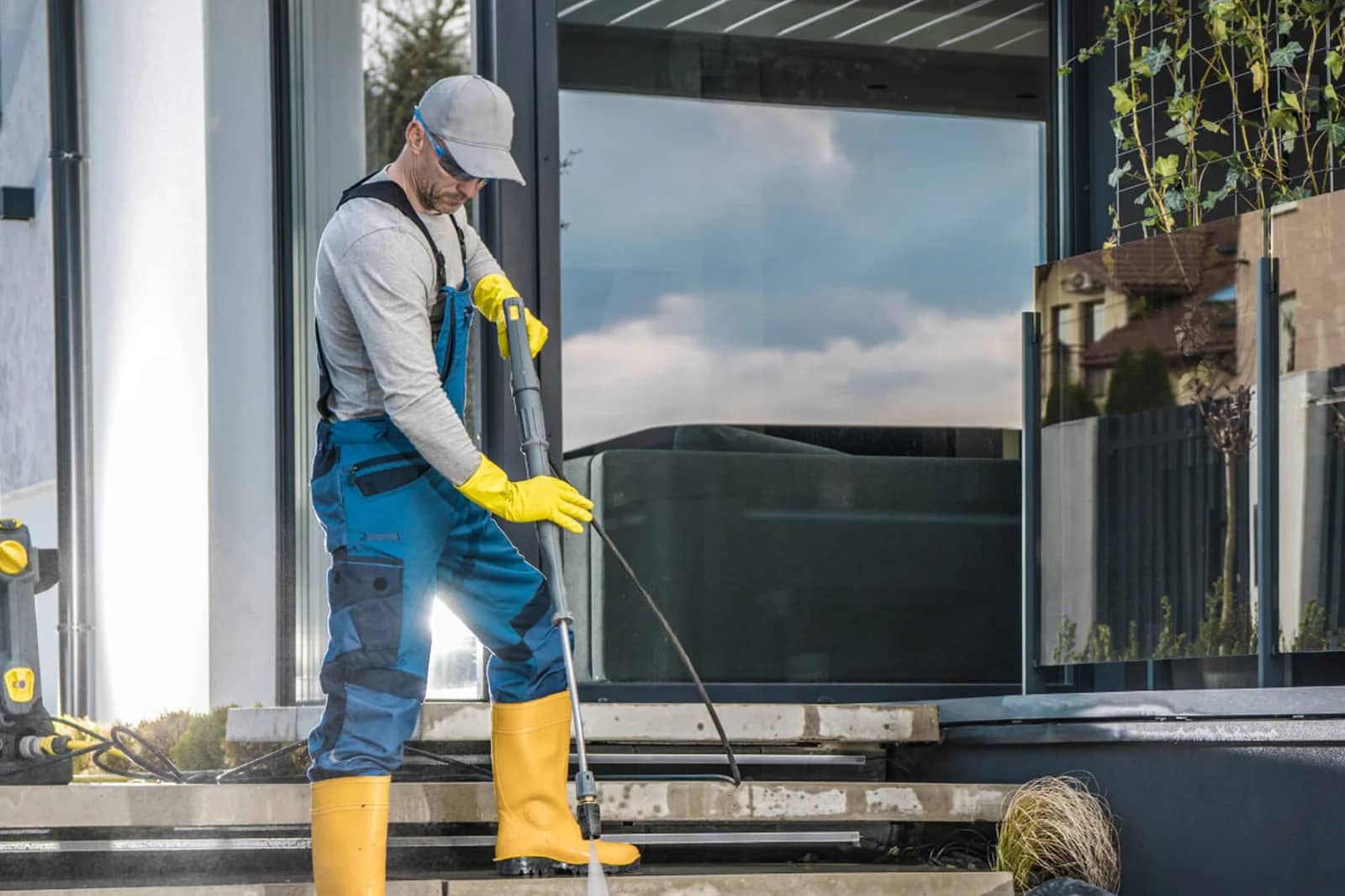
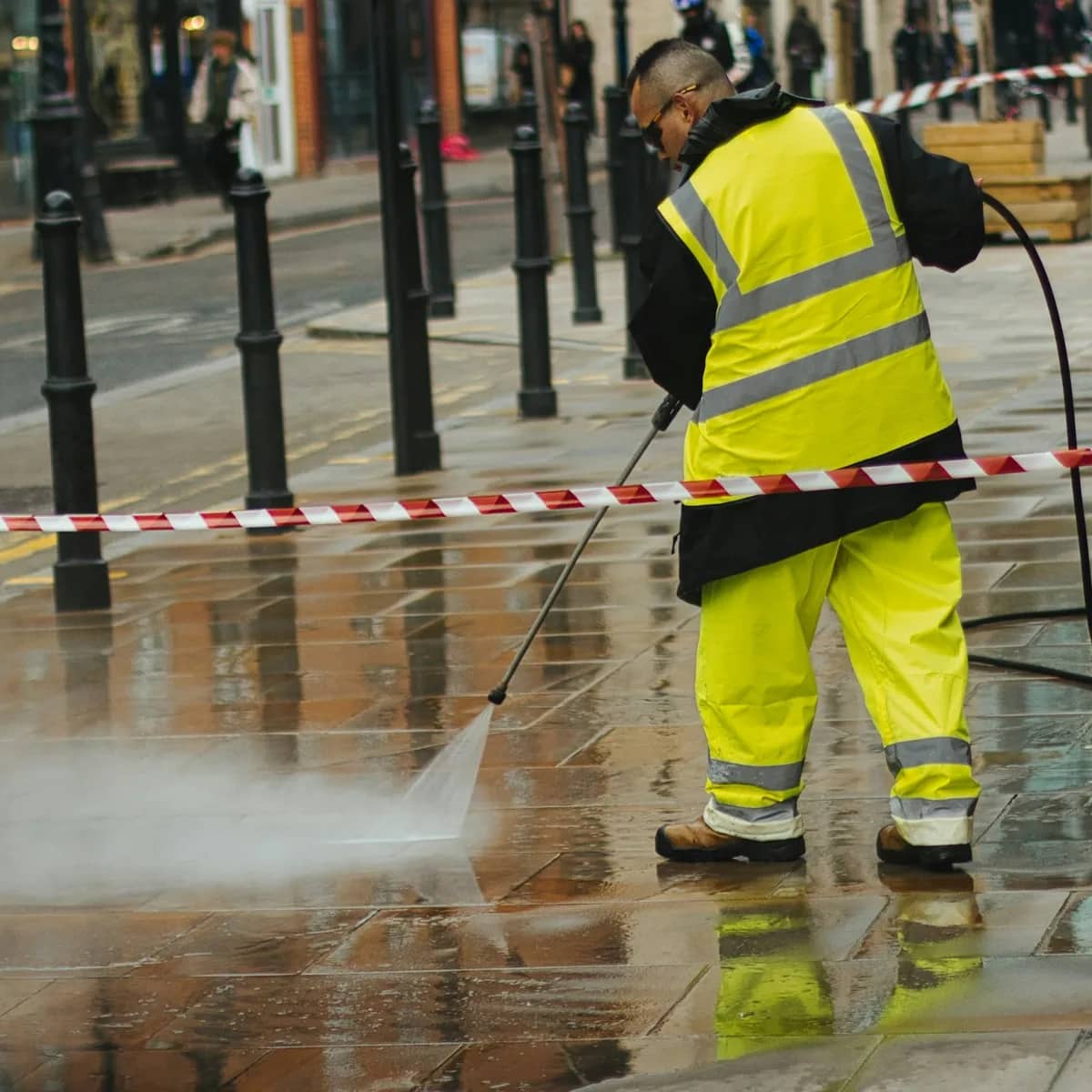
Every surface has a number. Broom-finished concrete takes three thousand PSI behind a rotating surface cleaner; painted cedar will not survive half of it, and jointed pavers lose their sand first. We test an out-of-sight patch, then run the whole area at one setting — a bare wand swung by hand is what leaves the arcs you can still read two summers later. Planting and glass are soaked first and rinsed at the end.
What's Included
Driveways, walkways and patios
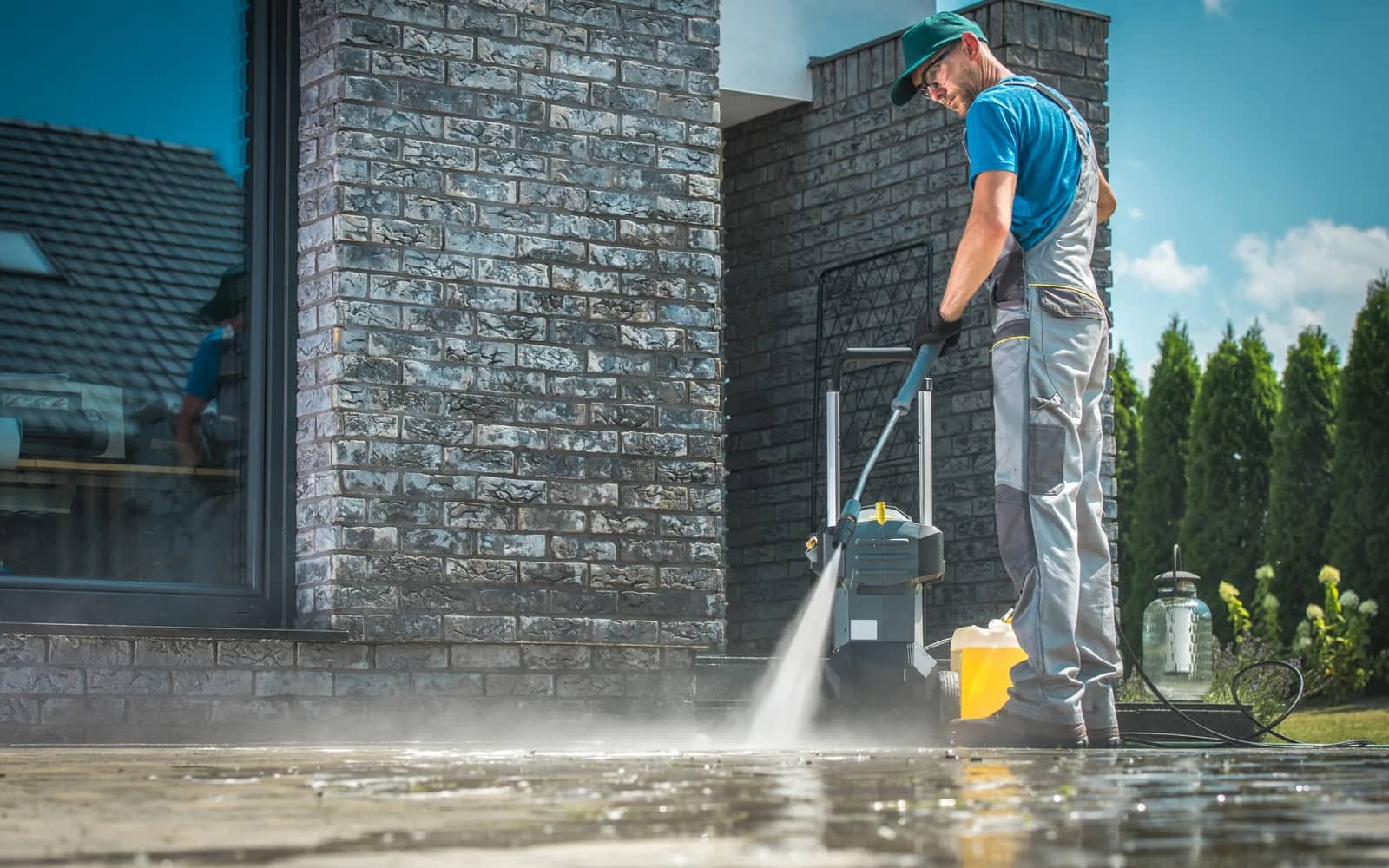
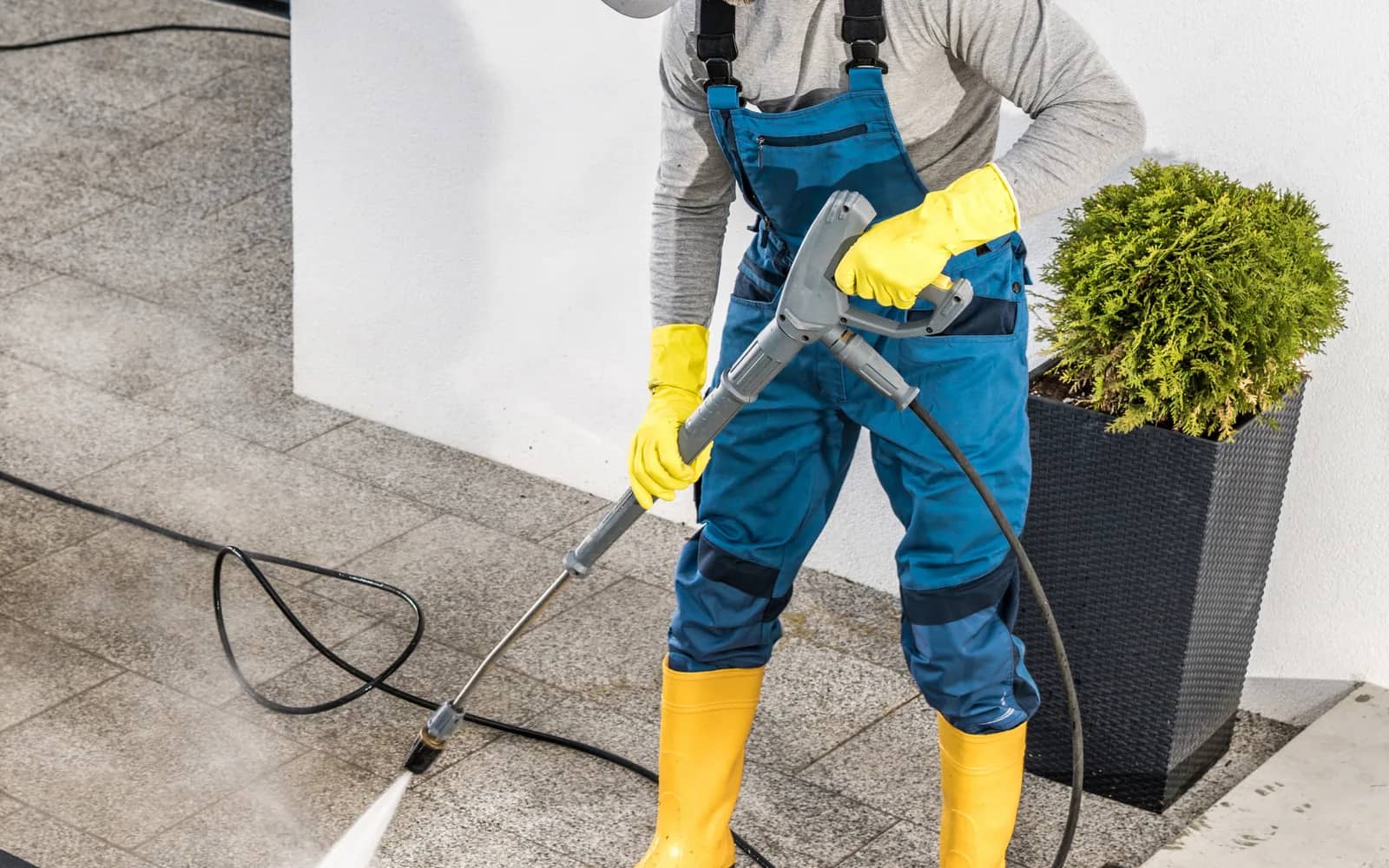
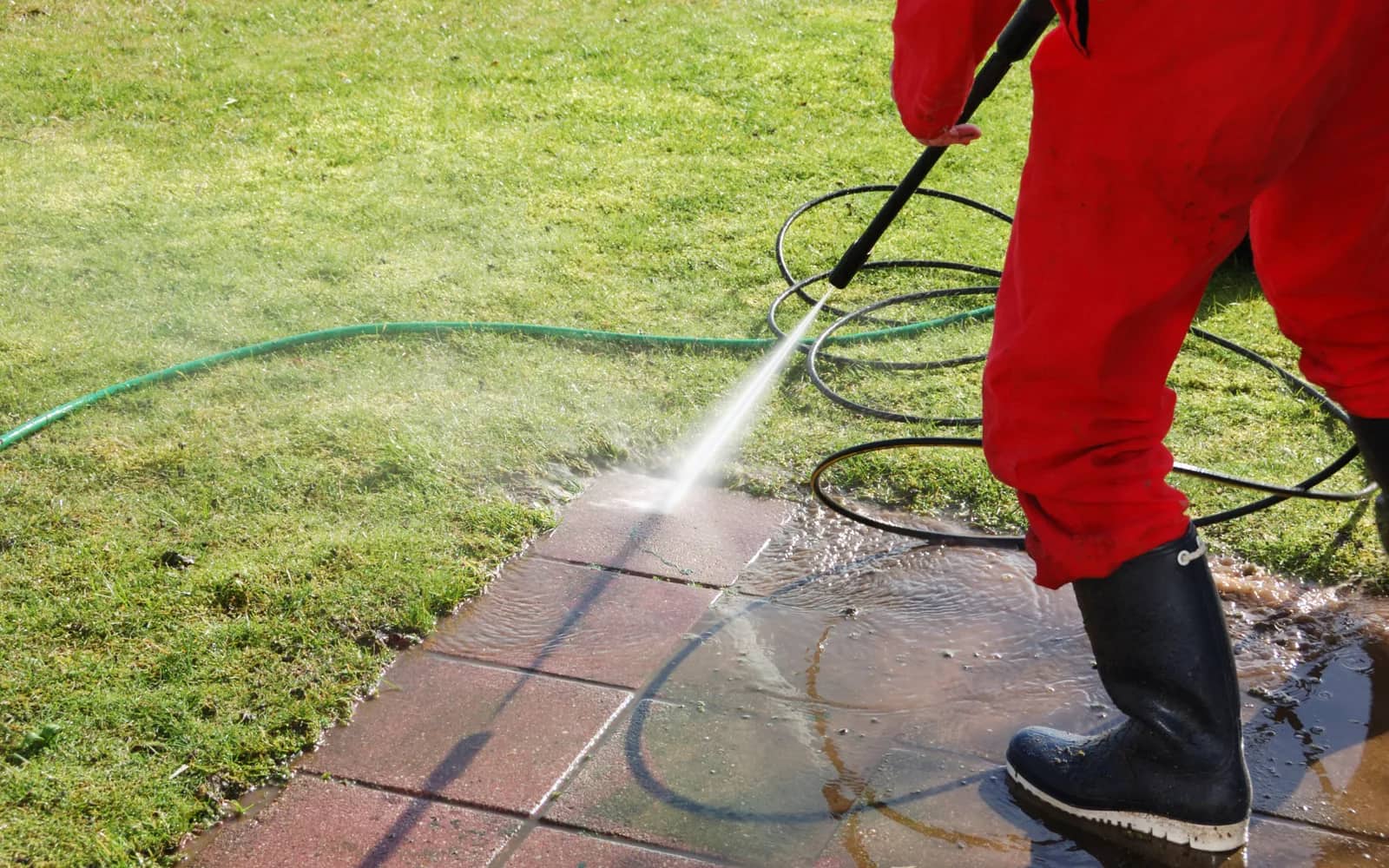
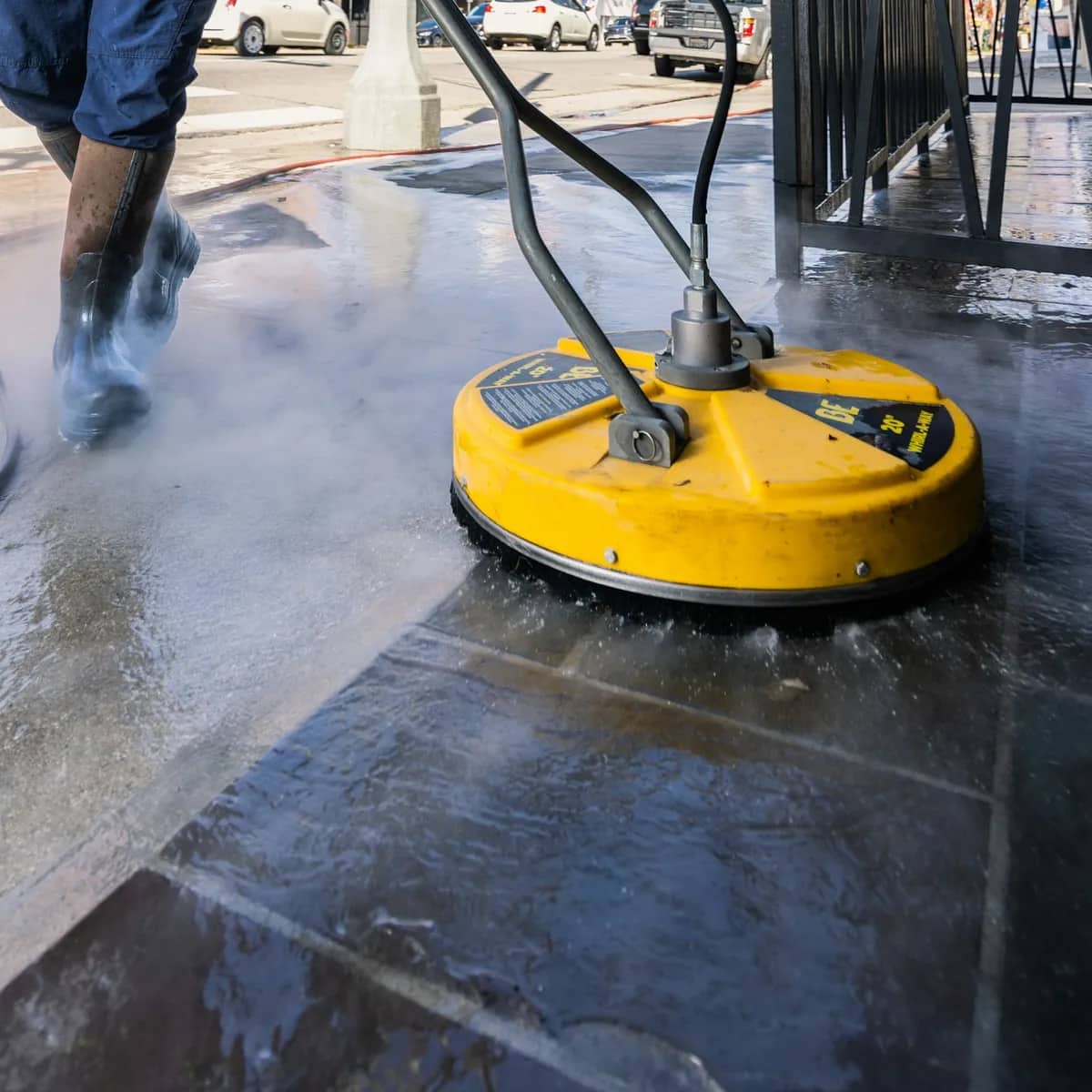
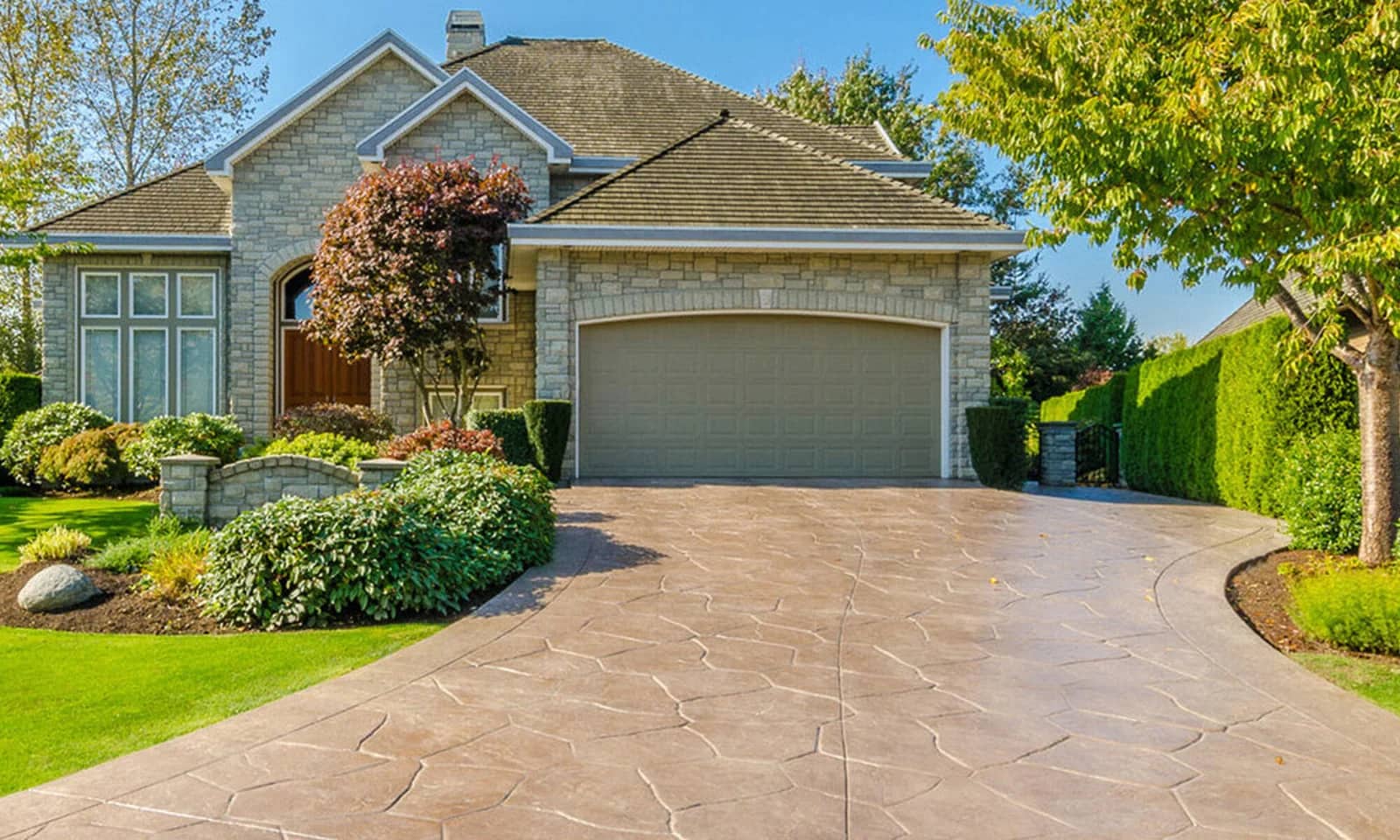
Poured concrete, exposed aggregate, pavers and flagstone, run with a rotating surface cleaner rather than a hand-held wand so the finish comes out uniform instead of striped. Oil and rust marks are treated separately first. On jointed paving we work at a pressure the sand survives and re-sand the joints after.
Siding, brick and stonework
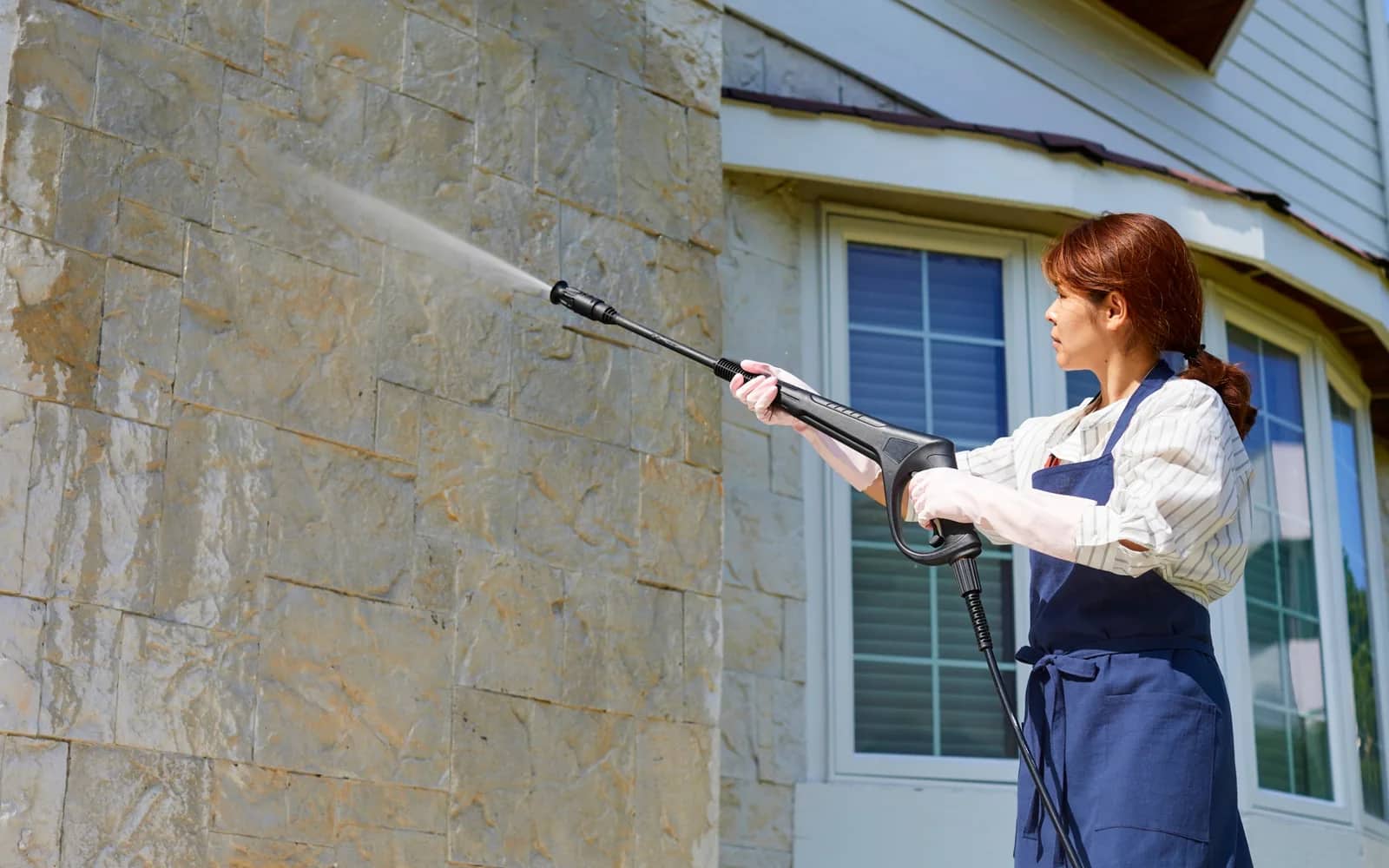
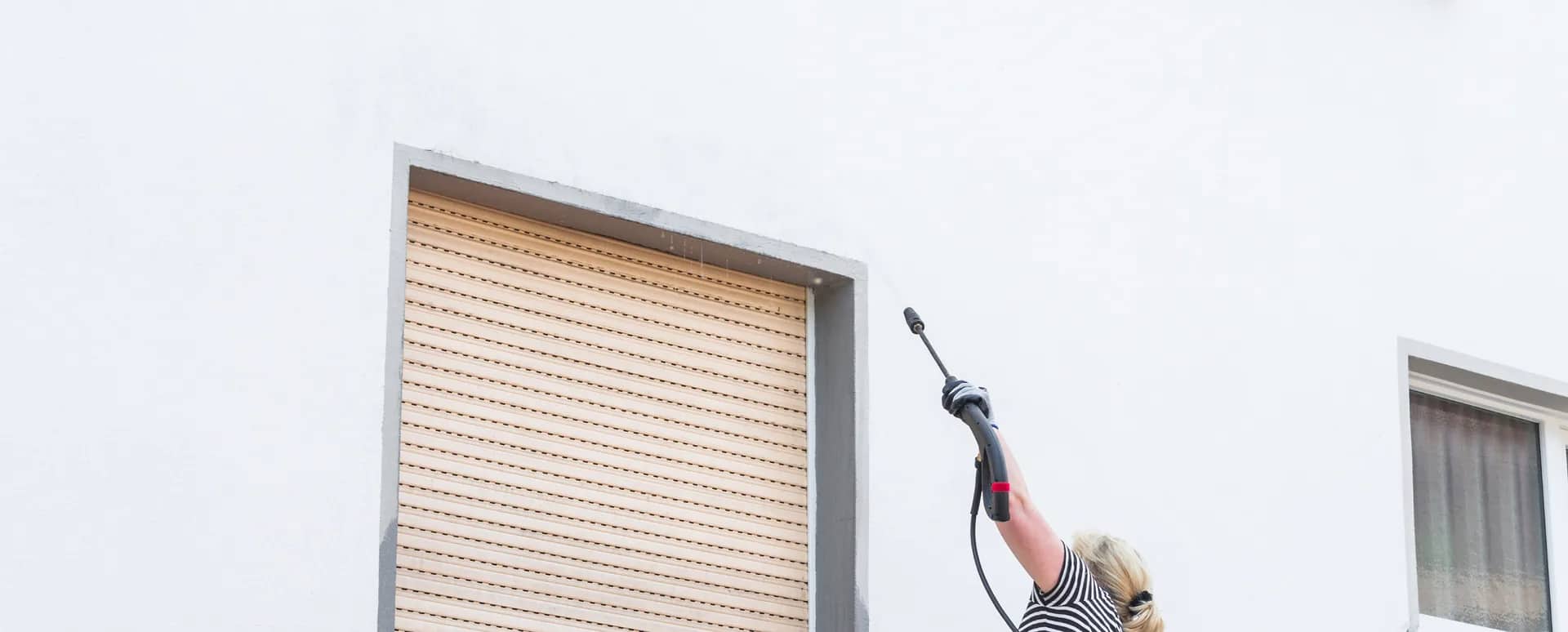
Vinyl, Hardie, brick, block and stone, washed from a distance and angle that cleans the face without forcing water up behind a lap or into a mortar joint. We wash bottom-up and rinse top-down, so run-off never streaks dry material below. Painted and cedar surfaces get a soft wash instead, and we say so at the quote.
Decks, steps and railings
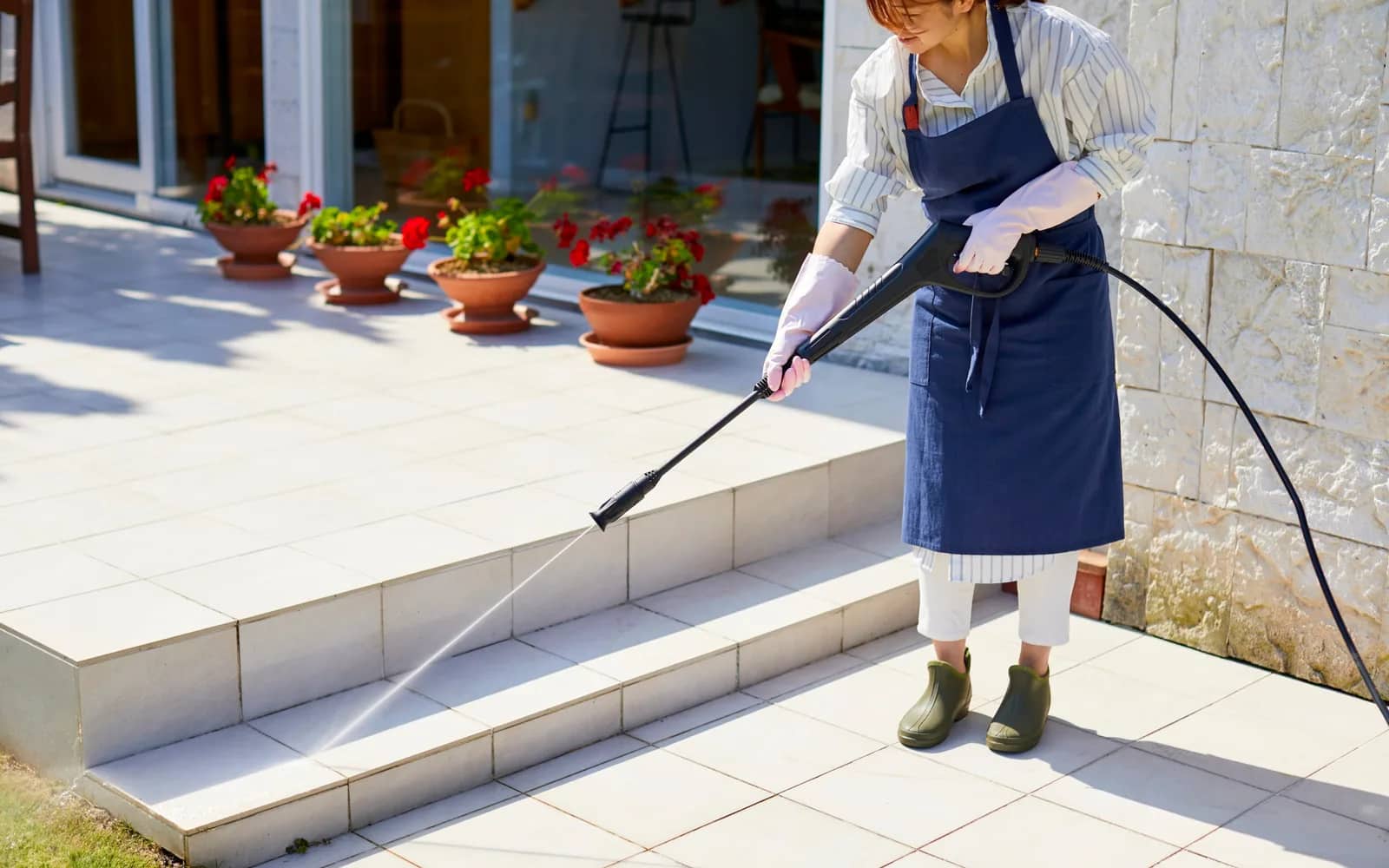
Timber, composite and concrete, cleaned with the grain and at a pressure that lifts the grey without raising the fibres. Softwood decking is the easiest surface on a property to permanently furrow, so it gets a wider fan and a slower pass. Steps, railings and the spindles everyone skips are done by hand.
Parkades, loading bays and bin enclosures
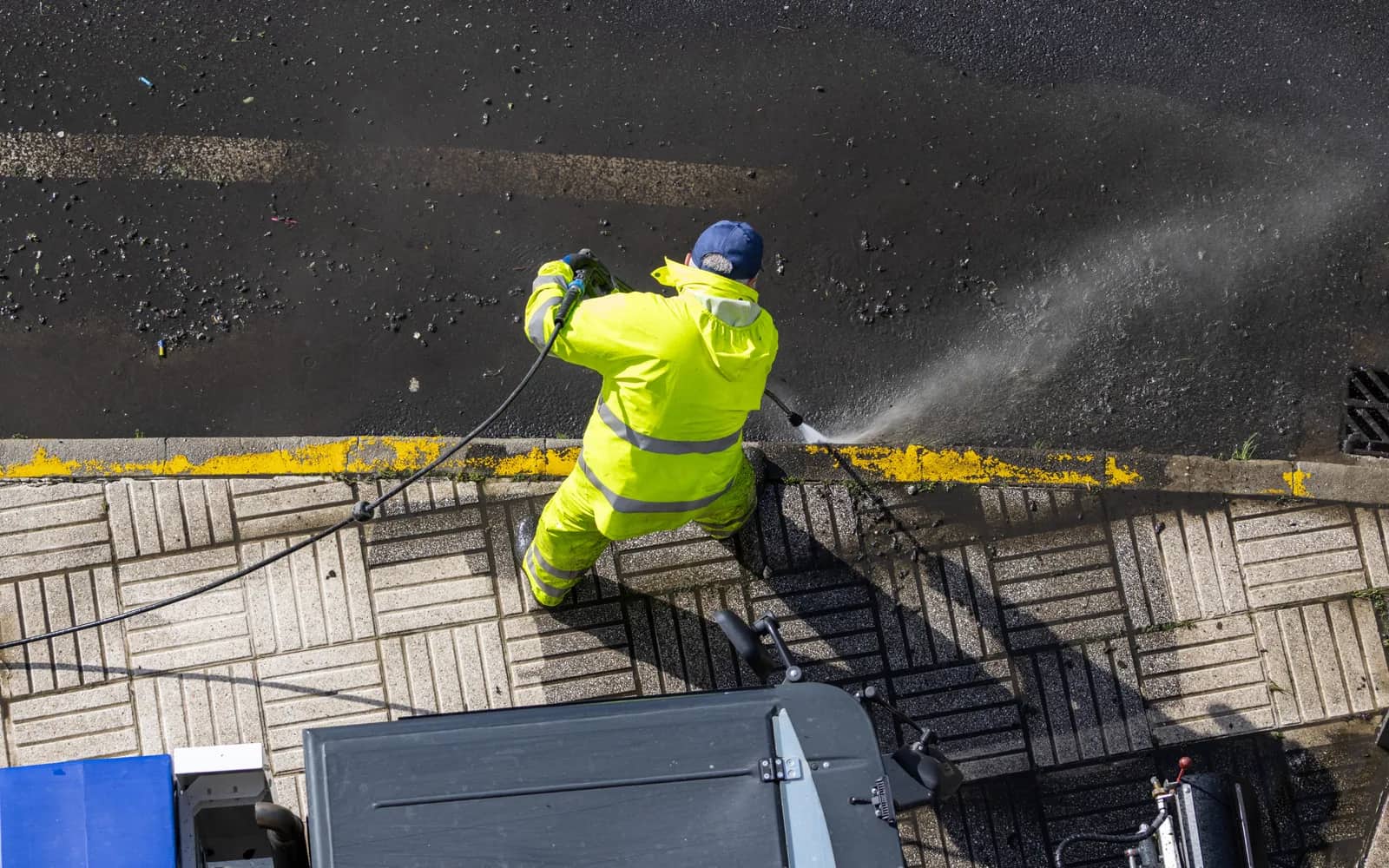
The concrete that carries traffic film, tyre rubber, oil and whatever came out of the bins. Work is scheduled around access — usually overnight or by level — and drains are covered or managed. Bin enclosures get degreased rather than rinsed, because the smell in there is residue on the slab, not the bins.
Moss, algae and traffic film
The three things a Greater Vancouver winter leaves behind, each taking a different approach. Moss is treated so the root goes with it rather than regrowing by June; algae comes off with detergent and dwell time; traffic film needs heat or a degreaser. Maximum PSI just rebooks you.
Surface testing and site protection
Before anything runs at full pressure we test a patch out of sight and show you the result. Planting is soaked with clean water first and rinsed again after, outlets and light fittings are covered, windows checked shut. Water, power and detergent all come off our own truck, not your tap or a common supply.
Why Choose RainCity?
High-pressure water in the wrong hands takes paint off siding, sand out of pavers and mortar out of joints, and a low price does not cover any of that. We carry full liability cover, we quote after looking at the surface rather than over the phone, and we run entirely off our own truck. When the machine is packed away we walk the finished area with you — in daylight, before we leave — because that is the only point at which a wash can honestly be called done.
Get a Free QuoteLicensed, and insured for the damage pressure can do
A New Westminster crew, working the whole region
Homes, strata properties and commercial sites
Free quotes, priced at the property, in writing
We don't leave until you have seen the finished surface
Recent Projects
See the Work Up Close
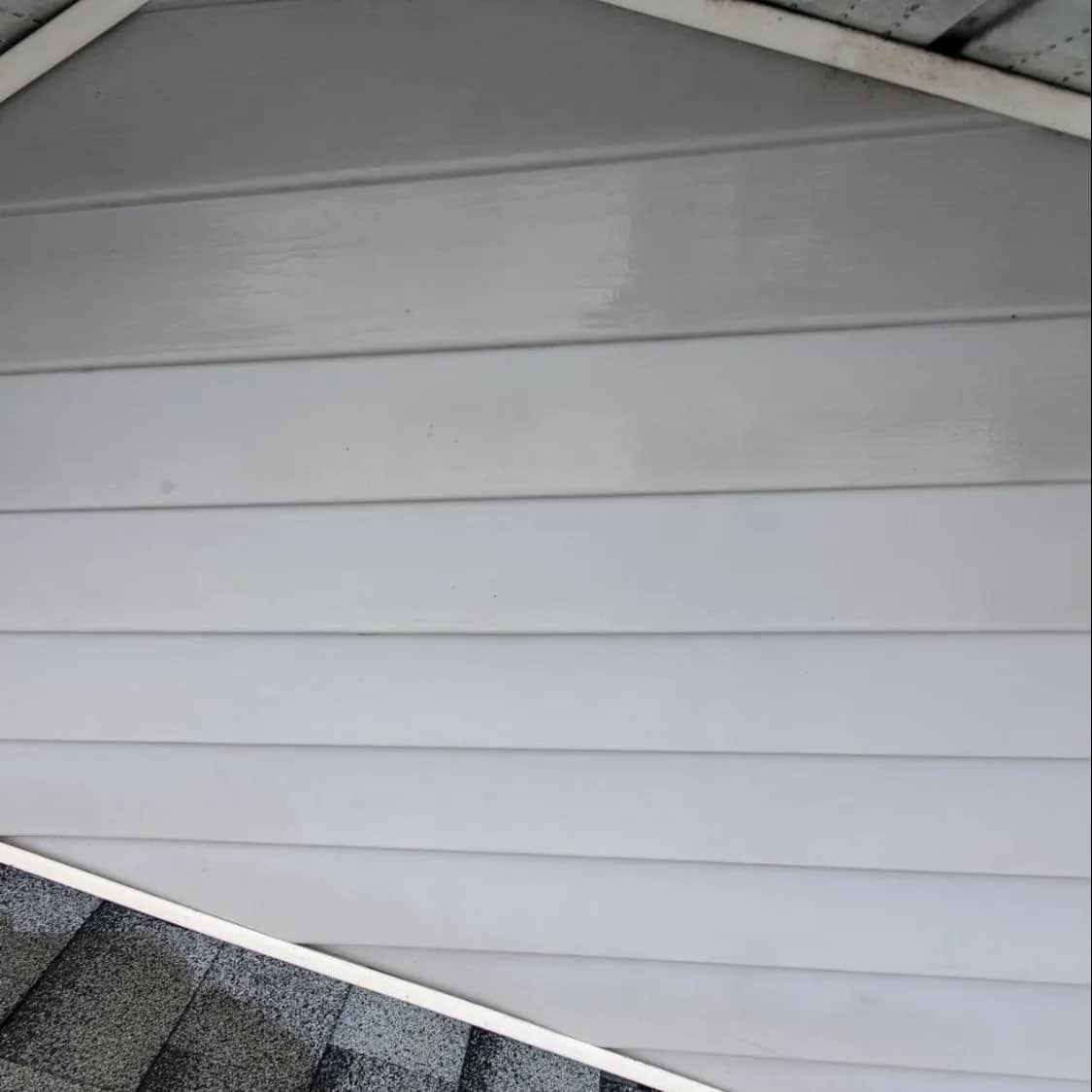
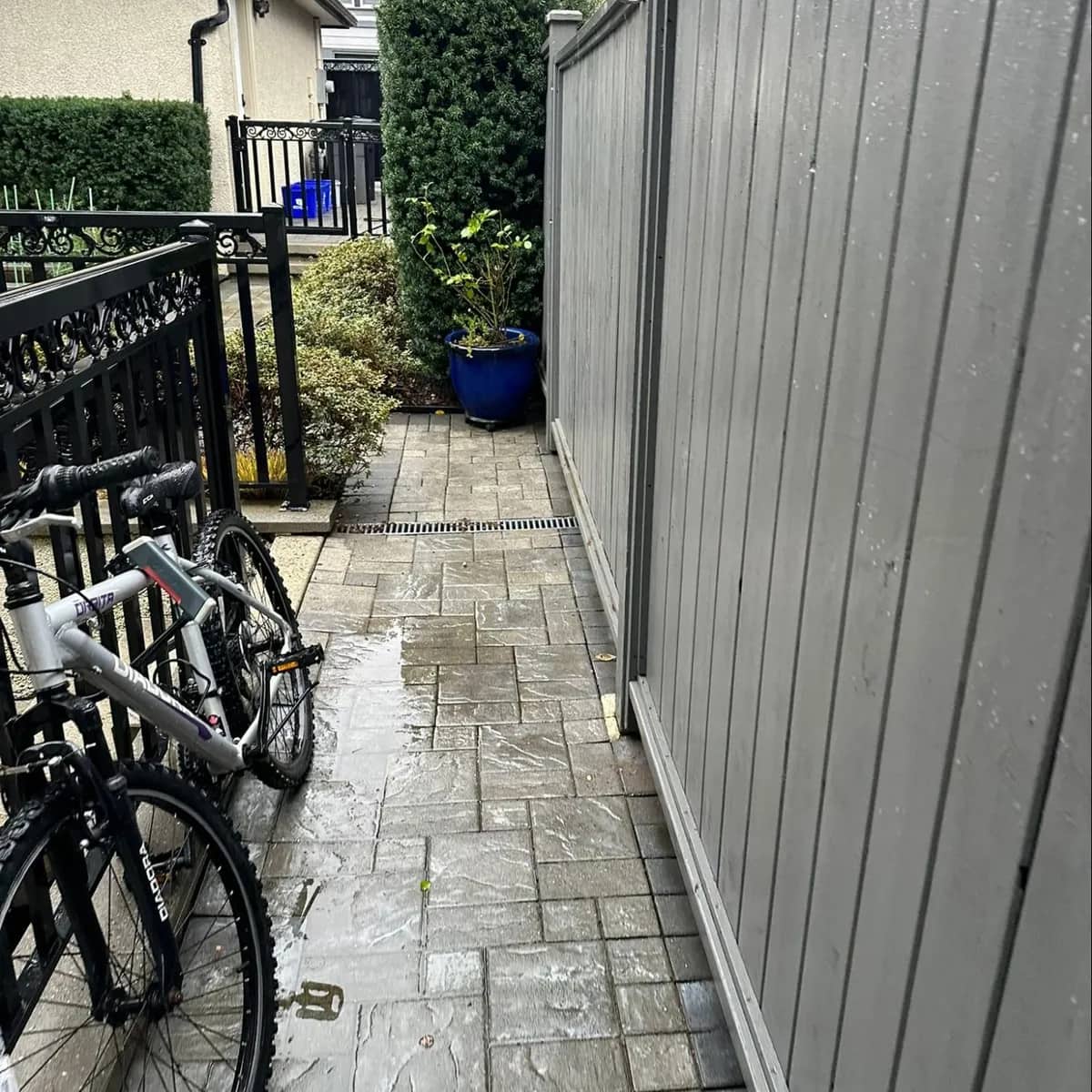
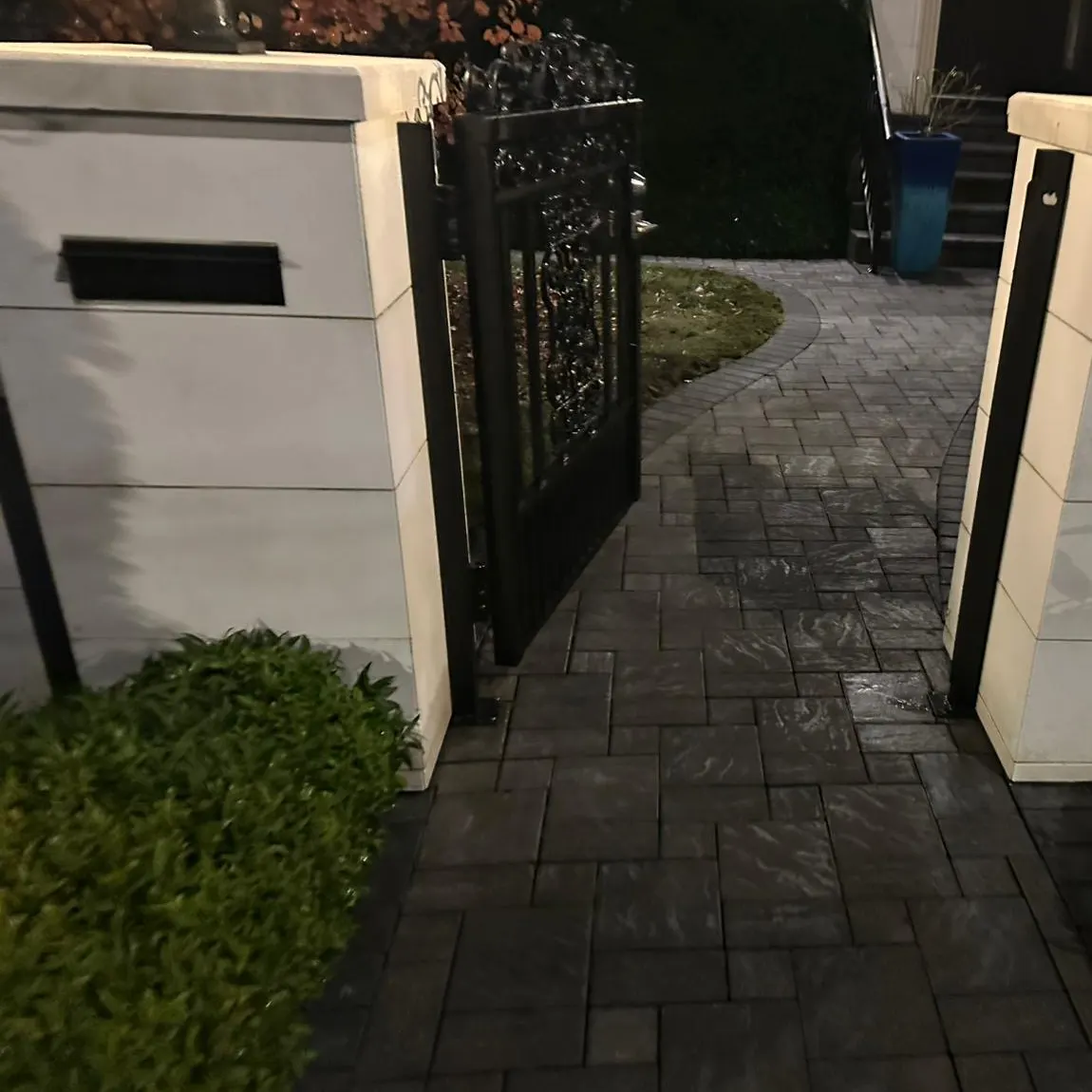
Photographs from our own jobs, before and after, with example photos marked as such. Select a project to see every photo from it.
How It Works
Our Simple Three-Step Process
Request a Free Quote
Call or send the form. We take the details, and price the property in front of us rather than reading off a rate card.
We Schedule & Arrive
We book a slot that suits you and turn up in it, with everything the job needs already on the truck.
Enjoy the Results
We walk the finished work with you before we leave, and put right anything that isn't up to standard.
Where We Work
This Work, Across Greater Vancouver
Everything comes off the truck — water, pressure, detergent and power — so the kit that reaches a strata lot in Surrey is the one that reaches an acreage in Anmore. Pick your community and the page will tell you what the work looks like there.
Anmore
Large treed lots above Port Moody, where the gutters fill with needles long before the leaves start.
Burnaby
Towers, townhouse complexes and single-family streets — a good deal of our strata common-area work sits here.
Delta
Ladner, Tsawwassen and North Delta: flat, open and close to the water, which is hard on painted siding.
Langley
The Township and the City both. Bigger lots, longer driveways, and surfaces that take a full season of weather.
New Westminster
Home. Heritage houses on the hill and a steep grid of streets — we know which ones the truck can park on.
Ridge Meadow
Maple Ridge and Pitt Meadows, out where the rain sits longest and a north-facing roof greens over fastest.
Surrey
The largest area we cover, Cloverdale down to South Surrey, and no shortage of commercial ground to keep sealed.
Tri-Cities
Coquitlam, Port Coquitlam and Port Moody. Hillside subdivisions, and hard surfaces that want the moss off every spring.
Vancouver
Character houses, laneways and mid-rise strata. Access is tight, so the water-fed pole earns its keep.
Often Booked Together
While We Are Already There
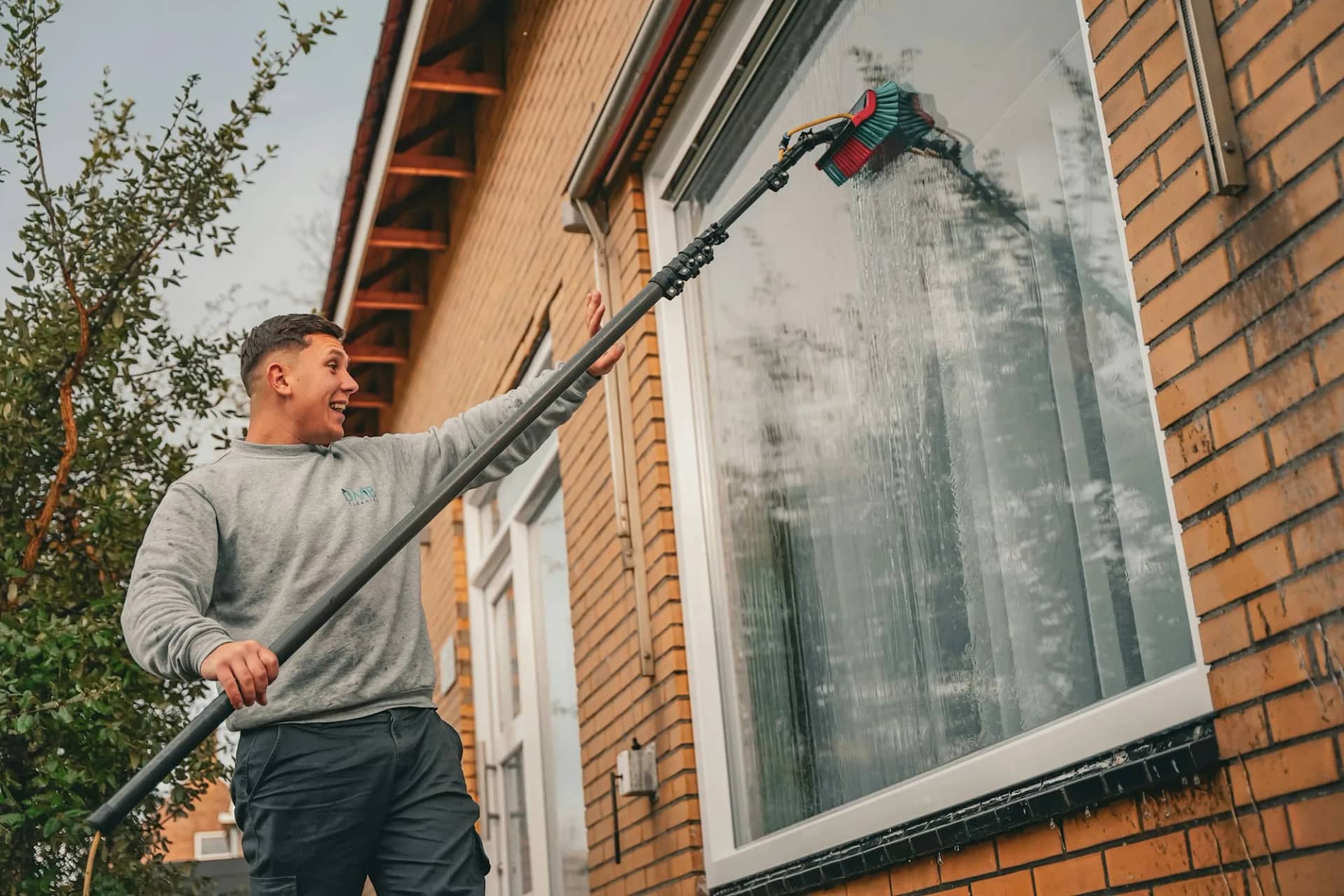
These are the jobs that go with this one, and the reason is nearly always the setup: the ladder, the truck or the dried surface is already where it needs to be. Worth knowing before a second visit is booked for something the first one was already set up for.

Request a Free Quote
Tell us what needs doing and we’ll come back with a price. Prefer to talk? +1 604 209 3357.
Based in New Westminster, serving Greater Vancouver.
Common Questions
Questions We Get Asked
The things people actually ask before booking, answered the way we would answer them on the phone. If yours is not here, call — you will get a straight answer from someone who does the work.
It can, which is why the pressure is chosen for the surface rather than left at maximum. Concrete takes a great deal; painted wood, cedar, stucco and old mortar take very little, and pavers lose their jointing sand well before they lose their moss. We test an out-of-sight patch first and show you the result. Where a surface should not be pressure washed at all, we say so and quote a soft wash instead.
Once a year suits most Greater Vancouver properties, and the useful timing is late spring — after the winter has finished growing moss on it and before a dry summer bakes the staining in. North-facing surfaces, anything under conifers and anything shaded most of the day will want it annually without question. A sunny, open driveway can often go two years between washes.
No. Water, pressure, detergent and power all come off the truck, so nothing is drawn from your outside tap, your outlets or a building's common supply — which on strata and commercial sites means no coordination with building services and no charge appearing on a shared meter. Should you prefer we ran off the property's own water instead, say so when we quote and we will.
Yes, because of what happens before the machine starts. Anything growing next to the work gets a long drink of clean water first — a root zone already full of water will not take up much of anything else — and the whole area is hosed down again once we finish. Delicate specimens are sheeted. We ask that pets stay inside while the equipment is running, mostly because the noise is considerable at close range.
Power washing removes material with pressure and is right for hard, durable surfaces — concrete, brick, stone, parkade floors. Soft washing runs at garden-hose pressure and uses a cleaning solution and dwell time instead, which is what a roof, stucco, painted siding or cedar needs. Many properties want both, and a quote will say which surfaces are getting which rather than treating the whole house one way.
On concrete and asphalt it is worth considering, because a clean, dry surface is the only time sealing is straightforward, and a sealed slab sheds the water and salt that break it up over winter. It is a separate service with its own quote, and it needs the surface fully dry first, so it is normally booked as a follow-up visit a few days later rather than the same afternoon.