Three Metres, And Why We Bring A Ladder
British Columbia sets fall protection at three metres, and a second-storey gutter sits above it. The rule explains most of what a quote is actually buying.

The number everything else follows from
British Columbia's Occupational Health and Safety Regulation requires fall protection where a worker could fall three metres — about ten feet — or more, and also where a fall from less than that could cause serious injury. WorkSafeBC sets out the requirement and the systems that satisfy it.
A second-storey gutter on an ordinary house sits above that line. So does most roof work, and so does a good deal of what looks from the driveway like straightforward ladder work.
The ladder exception, and its conditions
There is a limited exception for working from a portable ladder, and it is narrower than most people assume. Broadly, the work has to be light duty and short in duration at each position, the worker's centre of gravity has to stay between the side rails, one hand has to remain available for the ladder, and the ladder must not be positioned where a fall would carry further than the ladder height.
Read that list against what gutter clearing actually involves — reaching sideways along a run, two hands in the trough, moving along without repositioning — and most of the exception has been used up before the work starts.
The exception is for changing a bulb. It was never written for spending an afternoon leaning into a gutter.
What this means if you are doing it yourself
The regulation governs workers rather than homeowners on their own property, so nothing here makes a Saturday on a ladder unlawful. What it does is tell you what the people whose job is to assess this risk concluded about it.
Falls from height are among the most serious injury categories in residential work, and the ladder is over-represented in it relative to how dangerous it feels. The characteristic incident is not a dramatic one — it is a side-reach on a stable ladder that becomes an off-centre load.
If the decision is to do it anyway: work from the ground where possible, move the ladder rather than reaching, keep a hand free, and do not do it on wet ground or against a gutter you intend to lean on. A gutter is not a handhold and it is not fixed to the building to be one.
What it means in a quote
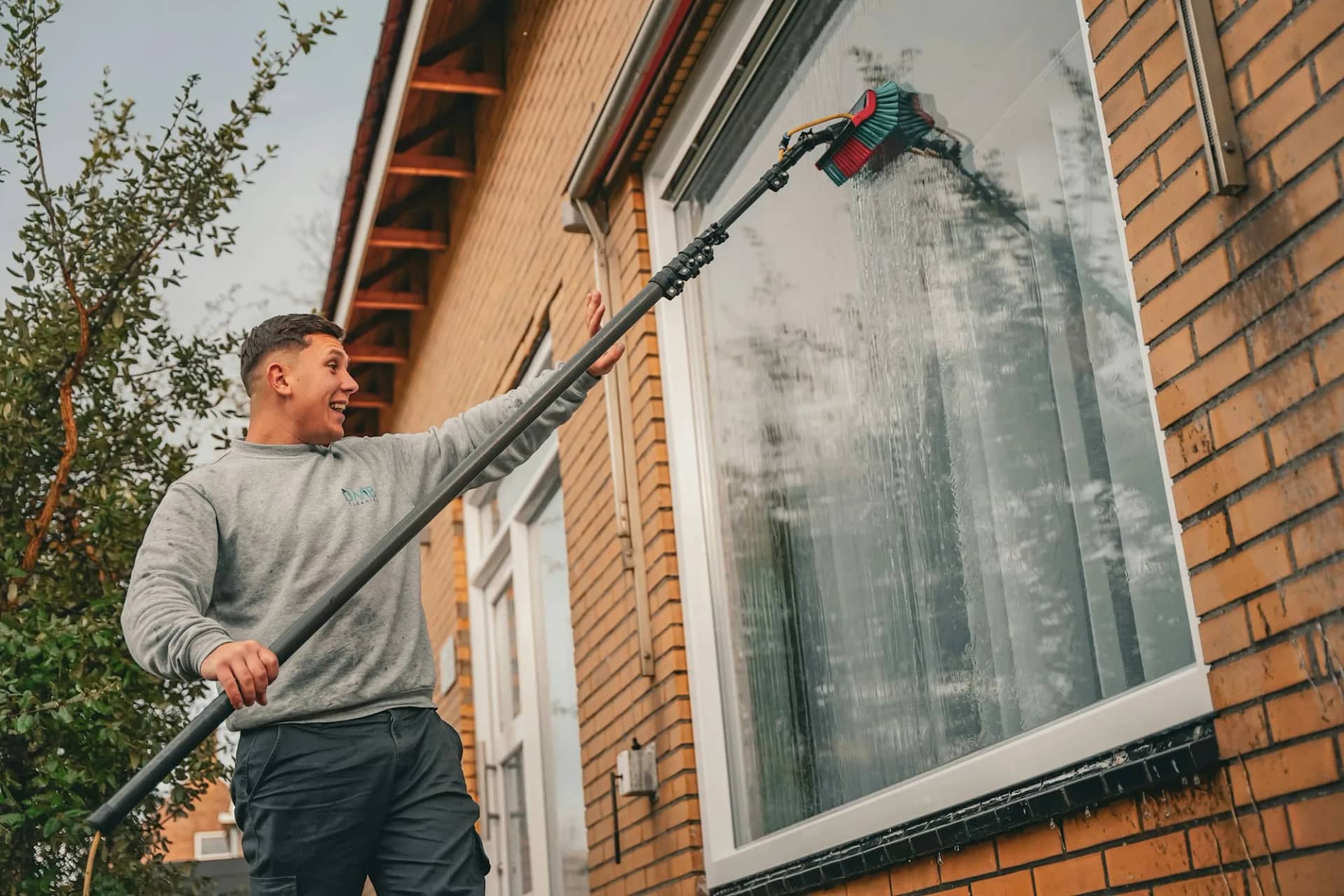
This is why access is the line that moves an exterior price more than area does. Above three metres the work needs a system — anchored fall arrest, an elevated platform, or a method that keeps the worker off the height altogether, such as pole work from the ground.
It is also why a quote should say which of those it assumed. A number priced for ladder work on a building that turns out to need a lift is not a competitive quote; it is a quote that has not been finished.
And it is worth asking a contractor to confirm their workers are covered. On any job involving height, that answer belongs in writing before the work rather than after an incident.
Questions About Height, Ladders And Exterior Work
What height does fall protection become mandatory in BC?
Three metres, or roughly ten feet, for workers under the provincial OHS Regulation — and lower than that where a fall could still cause serious injury. WorkSafeBC publishes the requirement and the acceptable systems.
Can a contractor just use a ladder?
Only within a narrow exception: light work, short duration at each position, centre of gravity between the rails, a hand free for the ladder, and no increased fall distance. Sustained gutter or roof work generally falls outside it.
Is it illegal for me to clean my own gutters?
No. The regulation covers workers rather than homeowners on their own property. It is still the most useful available assessment of the risk, made by people whose job is to assess exactly this.
Why is second-storey work more expensive?
Because above three metres the method changes, not just the height. Fall protection, elevated platforms or pole systems are different ways of working with different equipment, and that difference is most of the price gap between a bungalow and a three-storey.
What should I ask a contractor about safety?
That they are licensed and insured, that their workers are covered, and what access method they have assumed for your property specifically. All three should be answerable in writing before anyone arrives.
Where to read the rest
Most of what this affects is gutter cleaning and roof work, where the height is unavoidable, and window cleaning on anything above one storey.