How Often Gutters Actually Need Doing Here
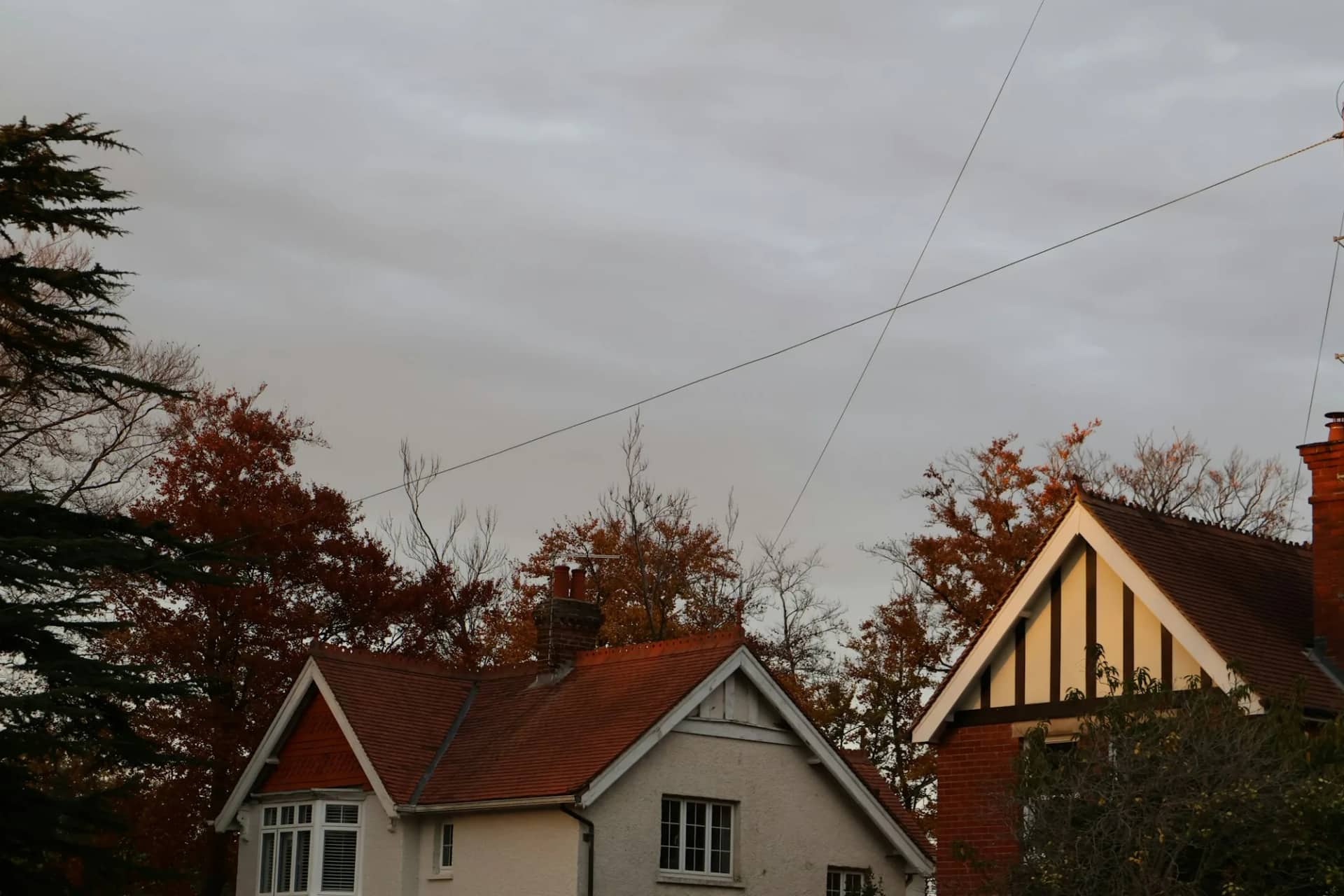
Twice a year is the standard answer and it is right about half the time. What decides it is what is growing over the roof, not what the calendar says.

The standard answer, and where it fails
Twice a year — spring and autumn — is the answer most people have heard, and for a lot of properties it is correct. It fails in two directions, and both are common here.
It over-serves an open site. A townhouse with no overhanging trees and a low-pitched roof may genuinely need one visit a year, and paying for two is paying for a schedule rather than for a building.
It under-serves a treed one. A house under mature conifers can fill a gutter completely between two visits booked six months apart, and the fill will happen at the worst possible point in the year.
What actually decides it
- Species overhead. Deciduous trees drop heavily and briefly, in a window you can plan around. Conifers shed all year and the needles pack into a mat that holds water rather than letting it through.
- Distance and height of the canopy relative to the roofline. A tall tree twenty feet away puts more into a gutter than a short one against the wall.
- Roof pitch. A steep roof throws debris off into the gutter. A shallow one lets it sit on the surface, which is a different problem and a slower one.
- Whether there are guards, and whether they are working. A guard that is doing its job changes the interval substantially. A guard with a moss mat growing on it has become the blockage.
- What the gutter is protecting. A gutter above a finished basement stairwell or a below-grade entry is not a maintenance item, it is a water-ingress control.
The timing matters more than the count
About three quarters of this region's annual precipitation falls between October and March — the Environment and Climate Change Canada climate normals put the airport near 1,189 mm a year, concentrated hard into that half. November and December are the two heaviest months on the record.
Which makes the autumn visit the one that carries the year. Booked too early, it clears the first of the leaves and misses the rest; the gutter is full again before the rain peaks. Booked after the drop has finished, it holds through the season.
An autumn gutter clean done in early October is a spring clean done six months early. It is the same work, at the wrong end of the drop.
How to tell without going up there
Three checks from the ground, none of which need a ladder:
- Watch a downspout during steady rain. Water should be running out of it. If a downspout is dry while the others are running, the gutter feeding it is blocked or the elbow is.
- Look at the line of the gutter from across the street. A run holding a full load of wet debris sags visibly between brackets.
- Look for growth on the outside edge. Anything green on the front lip of a gutter is growing in what is inside it, and it has been there long enough to root.
Staining down the fascia below a joint is the fourth sign, and by the time it shows the water has already been going somewhere it should not for a while.
Questions About Gutter Frequency in Greater Vancouver
How often should I clean my gutters in Vancouver?
Twice a year is a reasonable default for a property with any overhanging tree cover, and once a year can be enough on an open site with no canopy over the roofline. Tree species overhead is the deciding factor, not the size of the house.
When is the best time for the autumn clean?
After the bulk of the drop has finished rather than at the start of it, so the gutter goes into the wettest months clear. Booked too early it clears the first fall of leaves and refills before the rain peaks, which spends the visit at the wrong end of the season.
Do I still need it done if I have gutter guards?
Yes, usually less often. Fine debris passes through most guard systems and moss will grow on the mesh itself, at which point the guard has become the blockage. Guards change the interval; they do not remove the job.
What happens if I skip a year?
The immediate risk is overflow at the joints, which puts water down the fascia and against the wall rather than into the downspout. The slower one is weight — a full gutter holding water is heavy, and brackets and fascia are the things that give.
Is it worth doing before or after the first storm?
Before. Everything on this list is ordinary maintenance in September and October and becomes an access problem once the roof is wet and the weather has closed in.
Where to read the rest
The scope and the flow test are on the gutter cleaning page. Moss coming off the roof into the gutters is dealt with on the roof cleaning page.